Modern agriculture faces increasing pressure to optimise water resources whilst maintaining crop yields. Farmers are turning to advanced sensor technology to make informed decisions about irrigation timing and volume. Among the various options available, capacitive soil moisture sensors have emerged as a compelling alternative to traditional monitoring methods, offering precision and reliability that can fundamentally reshape water management strategies across diverse farming operations.
Understanding capacitive probe technology and its advantages over conventional soil monitoring
How capacitive sensors measure soil moisture without direct contact
Capacitive probes operate on a principle that differs markedly from older measurement techniques. These sensors generate an electric field within the soil and measure how the surrounding medium responds to this field. Since water molecules have a high dielectric constant, their presence significantly alters the capacitance reading. This allows the device to determine moisture content without requiring direct contact between the sensor's active components and the soil itself. The technology proves particularly valuable because it eliminates many of the degradation issues that plague contact-based systems. By measuring the dielectric properties of the surrounding soil, capacitive sensors can provide consistent readings over extended periods without suffering from corrosion or mineral build-up that typically affects electrodes in resistance-based systems.
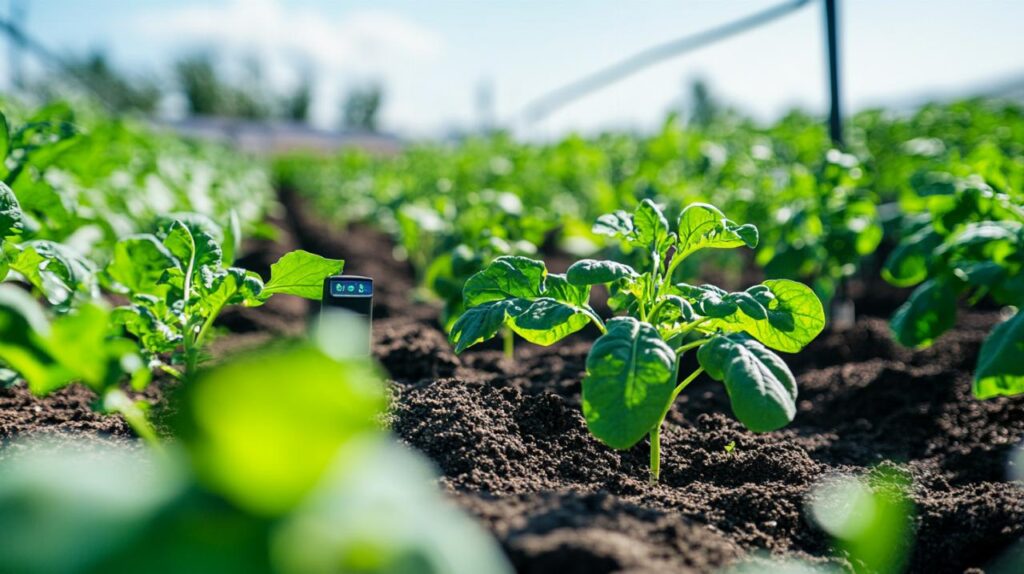
The market now offers both fixed and mobile capacitive probes to suit different operational requirements. Fixed installations, such as the Soilcrop solution from Sencrop, position sensors at multiple depths including ten, twenty, forty, and sixty centimetres below the surface. This multi-depth approach provides a comprehensive picture of how moisture moves through the soil profile, revealing patterns between field capacity and the bottom of the readily usable reserve. Mobile probes offer flexibility for farmers managing multiple fields or conducting spot checks across heterogeneous terrain. Recent calibration studies using the SEN0193 capacitive sensor in silty loam soil from Puglia, Italy, have demonstrated impressive accuracy with R-squared values ranging between 0.85 and 0.87, alongside root mean square error measurements between 4.5 and 4.9 per cent. These figures were achieved through systematic calibration involving twelve sensors tested at five moisture levels from five to forty per cent, with readings verified against samples dried in an oven at 105 degrees Celsius for twenty-four hours.
The Limitations of Traditional Tensiometers and Resistance-Based Methods
Traditional tensiometer probes quantify the force that plant roots must exert to extract water from soil, expressed in centibars or kilopascals. Whilst this measurement of matrix water potential offers valuable insights into plant water stress, tensiometers come with significant practical drawbacks. They require maintenance of a water-filled porous ceramic cup, which can become clogged with soil particles over time. Air bubbles can enter the system, requiring manual purging. In freezing conditions, these instruments become unreliable or inoperable altogether. The measurement range is also limited, typically functioning only in relatively moist soil conditions. Once the soil dries beyond a certain point, the tensiometer loses contact with the soil water and ceases to provide useful data precisely when irrigation decisions become most critical.
Resistance-based sensors, another traditional approach, measure electrical resistance between two electrodes inserted into the soil. Whilst simple and inexpensive initially, these sensors suffer from significant longevity issues. The electrodes corrode over time, particularly in soils with high salinity or when fertilisers are applied. This corrosion progressively degrades measurement accuracy, requiring frequent replacement. Additionally, resistance measurements are heavily influenced by soil temperature, salinity, and texture, necessitating complex calibration for each specific location and sometimes seasonal recalibration. The low-cost SEN0193 capacitive sensor, available for approximately six to eight pounds per unit, offers a compelling alternative. These sensors demonstrate low variability at lower moisture levels, with coefficients of variation between 6.5 and 10.3 per cent, though this increases to ten to sixteen per cent above thirty per cent moisture content. Despite this slight increase in variability at higher moisture levels, the overall performance and durability advantages make capacitive technology increasingly attractive for precision agriculture applications.
Practical Benefits of Capacitive Probes for Modern Irrigation Management
Accuracy and longevity: why capacitive technology outperforms older systems
The sealed design of capacitive sensors protects sensitive electronic components from direct soil contact, dramatically extending operational lifespan compared to resistance-based alternatives. Field installations have demonstrated reliable operation for multiple growing seasons without calibration drift, reducing the total cost of ownership despite potentially higher initial investment. The accuracy improvements translate directly into better irrigation decisions. Calibrated capacitive sensors can detect soil moisture changes with sufficient precision to trigger irrigation only when necessary, avoiding both water stress and excessive application. Studies indicate that when integrated into automated irrigation systems, capacitive sensors can improve water use efficiency by fifteen to twenty per cent. Given that irrigated agriculture consumes seventy per cent of the world's freshwater, even modest efficiency gains across large agricultural areas represent substantial resource conservation.
The technology proves particularly valuable in the context of climate change adaptation and water resource restrictions. As weather patterns become less predictable and water allocation for agriculture faces increasing scrutiny, farmers need measurement tools they can trust. The consistency of capacitive readings allows for confident decision-making even during critical growth stages when irrigation timing can significantly impact yield. The ESP32 data logging capabilities enable continuous monitoring without manual intervention, creating comprehensive datasets that reveal soil moisture dynamics throughout the growing season. This information helps farmers understand how different areas of their fields respond to irrigation and rainfall, identifying zones that may require adjusted management strategies.
Real-time data collection for optimising water usage across your fields
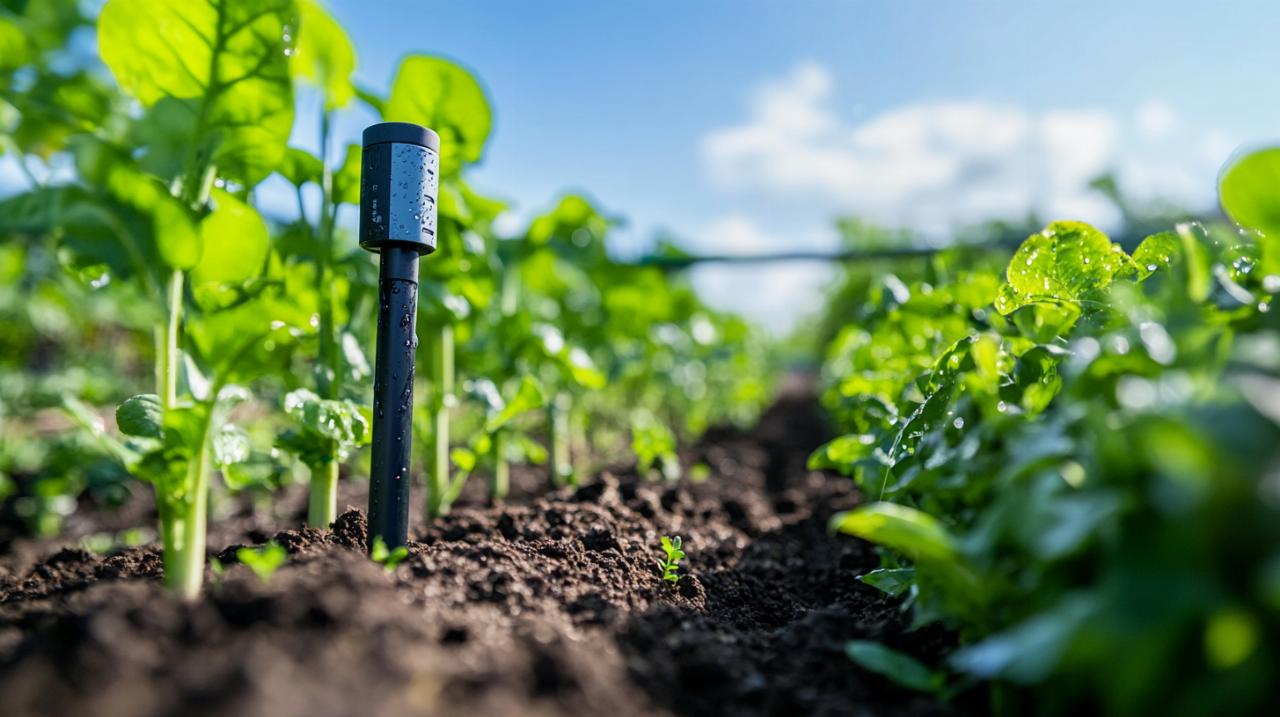
Modern capacitive probe systems integrate seamlessly with digital platforms that transform raw sensor data into actionable insights. Real-time monitoring allows farmers to observe soil moisture levels from anywhere with internet connectivity, eliminating the need for daily field walks to check irrigation status. This remote access proves particularly valuable during busy periods when labour is stretched across multiple tasks. The data streams from capacitive probes can be combined with measurements from other sensor types to create a comprehensive irrigation management system. Pyranometers, which convert solar radiation into electrical signals, work alongside capacitive probes to calculate evapotranspiration and water balance. The Solarcrop sensor from Sencrop, for example, can couple with anemometers and rain gauges to provide complete weather station functionality. The Irricrop solution offers simplified visualisation of evapotranspiration and water balance directly within mobile applications, allowing farmers to create up to ten different balance calculations by adjusting variables for specific crops or field zones.
This integration of soil moisture data with weather information enables predictive irrigation scheduling rather than reactive responses. By understanding both current soil moisture status and anticipated evaporative demand, farmers can schedule irrigation to meet crop needs whilst minimising water wastage. The precision enabled by capacitive sensor technology supports variable rate irrigation systems that adjust application rates across different management zones within a single field. For operations managing heterogeneous soils, multiple probe installations provide the spatial resolution necessary to optimise irrigation for each soil type rather than applying a uniform schedule that inevitably overirrigates some areas whilst underirrigating others. The key to maximising returns from sensor investment lies in developing the skills to interpret data and translate measurements into practical irrigation adjustments that avoid both waste and crop stress.
Implementing capacitive soil humidity monitoring on your farm
Installation best practices and probe placement strategies
Proper installation fundamentally determines the quality of data obtained from capacitive probes. The installation process typically requires an auger to create a bore hole that matches the probe dimensions. Care must be taken to ensure firm contact between the probe surface and surrounding soil throughout the measurement zone. Air gaps around the sensor will cause inaccurate readings, as the electric field will measure air space rather than soil properties. After augering the hole to the appropriate depth, many practitioners create a slurry of the excavated soil with water and pour this around the probe as it is inserted, ensuring intimate contact without air pockets. The surrounding soil should then be gently tamped to restore natural density without creating compaction that would alter water movement patterns.
Understanding soil composition at the installation site is essential for interpreting readings correctly. A capacitive sensor calibrated for silty loam soil will provide different readings in sandy or clay soils at identical moisture contents because the soil texture affects the dielectric properties measured by the probe. For farms with heterogeneous soils, multiple probe installations become necessary to capture the variability across the operation. Strategic placement should consider crop rooting depth, irrigation system coverage patterns, and representative locations within each management zone. Avoiding areas immediately adjacent to irrigation emitters prevents measurements skewed by localised saturation. Similarly, placing probes too close to field edges may capture atypical moisture patterns influenced by boundary effects. The goal is to position sensors where they represent the conditions experienced by the bulk of the crop root zone throughout the irrigation cycle.
Integrating capacitive sensors with automated irrigation systems
The true potential of capacitive probe technology emerges when measurements directly control irrigation equipment. Automated systems can be programmed with threshold values that trigger irrigation when soil moisture falls below specified levels and cease application once moisture returns to the target range. This automation eliminates human error and ensures consistent application scheduling regardless of labour availability. The integration typically involves connecting the sensor output to a controller that operates solenoid valves or pump systems. For smart farming applications, cloud-based platforms receive data from capacitive probes and send control signals to irrigation hardware, creating a closed-loop system that requires minimal manual intervention. These platforms can incorporate additional variables such as weather forecasts, crop growth stage, and soil type to refine irrigation scheduling beyond simple moisture thresholds.
Selecting appropriate technology for your operation depends on several factors including accuracy requirements, the number of different crops managed, available budget, and preferred measurement methodology. Whilst capacitive probes offer excellent accuracy and longevity, successful implementation requires commitment to proper installation and ongoing data interpretation. Farmers should view sensor investment as part of a broader precision agriculture strategy rather than a standalone solution. Training in data interpretation ensures that the information provided by capacitive probes translates into informed irrigation decisions. As water resources face increasing pressure and agricultural input costs continue rising, the ability to apply water precisely when and where crops need it becomes not merely an efficiency improvement but a fundamental requirement for sustainable farming. Capacitive sensor technology provides the measurement foundation upon which effective irrigation management systems are built, transforming water application from an art based on experience and intuition into a science guided by accurate, real-time data.